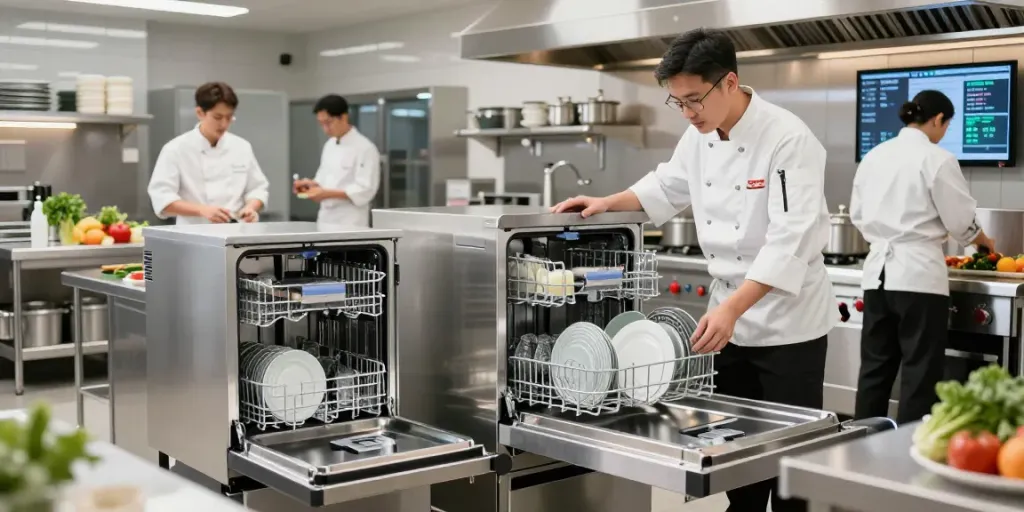
Understanding Commercial Dishwashers & Glasswashers
In today's fast-paced food service industry, efficiency and cleanliness are paramount. This is where Commercial Dishwashers & Glasswashers play a pivotal role. Designed to handle large volumes of dishware and glassware, these machines are essential for maintaining hygiene and operational efficiency. This article delves into the specifics of these vital kitchen appliances, exploring their differences from residential models, their energy efficiency importance, and the various types available in the market.
What Are Commercial Dishwashers & Glasswashers?
Commercial dishwashers are robust, high-capacity appliances engineered to handle the demanding needs of restaurants, bars, and other food service establishments. Unlike their residential counterparts, they are built for longevity and efficiency, capable of washing large quantities of dishes rapidly. Glasswashers, on the other hand, are specifically designed for cleaning glassware, ensuring sparkling results without damaging delicate items. These machines use powerful jets and high temperatures to sanitize and remove tough stains, grease, and residues.
How Do They Differ from Residential Models?
The primary differences between commercial and residential dishwashers lie in their design, capacity, and performance. Residential models are optimized for home use, generally accommodating smaller loads with longer cycles and lower power consumption. In contrast, commercial dishwasher models feature:
- Higher Capacity: Able to clean dozens of plates and glasses in a single cycle.
- Faster Wash Cycles: Designed for quick turnaround, allowing for continuous operation in busy settings.
- Durable Construction: Made from stainless steel and other robust materials that withstand heavy use.
- Advanced Sanitization: Utilizing higher temperatures and chemical solutions to ensure compliance with health standards.
The Importance of Energy Efficiency in 2026
As sustainability becomes increasingly crucial, the importance of energy-efficient commercial dishwashers cannot be overstated. In 2026, the focus on reducing energy and water consumption will be paramount. Newer models not only save on utility bills but also contribute to a restaurant's overall sustainability goals. Energy Star-rated machines are now widely available, providing reliable options that comply with strict environmental standards, minimizing operational costs while maximizing cleaning efficiency.
Types of Commercial Dishwashers & Glasswashers
Overview of Different Models: Conveyor, Undercounter, and More
When selecting a commercial dishwasher, businesses have several models to choose from, each tailored for specific needs:
- Conveyor Dishwashers: Ideal for high-volume operations, these machines have a continuous belt that moves dishes through different phases of cleaning. They are perfect for bustling kitchens where quick processing is essential.
- Undercounter Dishwashers: Compact and efficient, undercounter models fit neatly beneath counters, making them perfect for establishments with limited space. They can handle smaller loads while providing powerful cleaning.
- Door-Type Dishwashers: These units are designed to accommodate large racks of dishes and are popular in institutional settings. Their vertical design allows for efficient use of space without sacrificing capacity.
- Glasswashers: Specifically designed for cleaning glassware, these machines ensure crystal-clear results and are essential in bars and restaurants serving drinks.
Benefits of Glasswashers in Food Service
Glasswashers offer several unique benefits for food service operations, including:
- Spotless Results: They are designed to prevent etching and streaks, ensuring that glassware comes out sparkling clean.
- Specialized Rinse Cycles: Many glasswashers include specific rinse cycles that cater to the delicate nature of glass, minimizing damage.
- Energy and Water Savings: They often operate using less water and energy compared to standard dishwashers, making them a sustainable choice.
Choosing the Right Model for Your Business Needs
When selecting a commercial dishwasher or glasswasher, consider the following factors:
- Volume of Use: Assess how many dishes or glasses you need to clean in a typical day to determine the capacity you require.
- Space Available: Measure your kitchen space to ensure you choose a model that fits well without overcrowding.
- Additional Features: Look for models with advanced features such as automatic dispensing of detergent and drying systems that enhance efficiency.
Maximizing the Efficiency of Your Equipment
Best Practices for Operating Dishwashers & Glasswashers
To get the most out of commercial dishwashers and glasswashers, consider implementing these best practices:
- Load Efficiently: Avoid overcrowding the machine, as it can hinder cleaning performance. Follow the manufacturer’s guidelines for optimal loading.
- Use the Right Detergent: Ensure you are using the appropriate detergents and rinse agents for your specific machine.
- Monitor Water Temperature: Regularly check that the water temperature meets the necessary standards for effective sanitation.
Maintenance Tips to Extend Lifespan
Proper maintenance is key to extending the lifespan of your commercial dishwashing equipment. Here are essential maintenance practices:
- Regular Cleaning: Clean the filters, spray arms, and interior of the machine to prevent buildup.
- Routine Inspections: Schedule regular professional inspections to catch any potential issues early.
- Monitor Performance: Keep track of the machine’s performance to spot any declines in its efficiency, allowing for prompt repairs.
Monitoring Performance Metrics for Optimal Use
To ensure your commercial dishwashers and glasswashers operate at peak efficiency, track the following performance metrics:
- Cycle Times: Measure the time it takes for a complete wash cycle, which affects overall workflow.
- Water Usage: Monitor water usage per cycle to ensure efficient operation and identify potential leaks.
- Energy Consumption: Keep tabs on energy usage to assess operational costs and identify areas for improvement.
Cost Considerations and Budgeting
Understanding Average Costs of Commercial Dishwashers & Glasswashers
The investment in commercial dishwashers and glasswashers varies widely based on model and features. Typically, costs can range from:
- Undercounter Models: $2,000 - $5,000
- Door-Type Models: $5,000 - $15,000
- Conveyor Models: $15,000 - $30,000
It’s essential to consider not only the purchase price but also the long-term operating costs, including energy, water, and maintenance.
Financing Options and Return on Investment
Many businesses opt for financing plans to manage the upfront costs of purchasing commercial dishwashers. Leasing options are also available, allowing businesses to maintain cash flow while obtaining the necessary equipment. Assessing the return on investment (ROI) is crucial; with efficient machines, businesses can save on labor and utility costs, which can lead to significant savings over time.
Cost-Saving Features to Look for in 2026
In 2026, it will be vital to consider cost-saving features that can reduce overall expenses. Look for:
- Energy Efficiency Ratings: Machines with high Energy Star ratings often translate into lower utility bills.
- Built-In Water Saving Features: Many modern models include advanced sensors that adjust water usage based on load size.
- Automatic Cleaning Cycles: Units that self-clean can minimize maintenance labor costs, enhancing long-term savings.
Future Trends in Dishwashing Technology
Emerging Technologies in Commercial Kitchen Equipment
The landscape of commercial dishwashing is evolving with technological advancements. Expect to see:
- IoT Integration: Smart dishwashers equipped with IoT technology will allow for remote monitoring and diagnostics.
- Advanced Filtration Systems: New filtration systems that recycle and purify water will enhance sustainability.
- Enhanced User Interfaces: Touchscreen controls and mobile app integrations will make operation easier and more intuitive.
Predictions for Energy Usage and Sustainability Practices
As the industry shifts toward more sustainable practices, energy usage predictions indicate a continued decline in consumption due to more efficient designs and technologies. Establishments that adopt sustainable practices will not only benefit the environment but also their bottom line.
How to Adapt to Changing Consumer Expectations
As consumers become more environmentally conscious, businesses should align their operations with these expectations. Adopting energy-efficient appliances, reducing water usage, and maintaining transparency about sustainability efforts can enhance brand reputation and customer loyalty.
What are the leading brands of commercial dishwashers?
Some of the leading brands in the commercial dishwasher market include Hobart, CMA, Jackson, and Electrolux, recognized for their reliability and performance.
How do I choose between a dishwasher and a glasswasher?
The choice between a dishwasher and a glasswasher largely depends on your specific needs. If your establishment relies heavily on glassware, a glasswasher is essential. Otherwise, a standard dishwasher may suffice for mixed-use.
What is the typical lifespan of a commercial dishwasher?
On average, a commercial dishwasher can last between 7 to 15 years, depending on usage and maintenance practices.
What maintenance is required for commercial dishwashers?
Regular maintenance includes cleaning filters and spray arms, checking seals for leaks, and scheduling professional inspections periodically to ensure optimal performance.
Are there eco-friendly options available for commercial dishwashers?
Yes, many manufacturers now offer eco-friendly models that use less water and energy, making them a sustainable choice for environmentally conscious businesses.